How to Choose the Best Porcelain Tile for Living Room

Table of Contents
- Key Takeaways
- What Makes a Porcelain Tile Right for a Living Room?
- Consider the Living Room Size Before Choosing Tile Format
- How to Choose the Right Porcelain Tile Colour and Pattern
- How to Select Porcelain Tiles for Living Room Floors
- How to Choose Porcelain Tiles for Living Room Walls
- How to Match Porcelain Tiles With Furniture and Lighting
- Common Mistakes When Choosing Living Room Porcelain Tiles
- Why Choose Lioli Ceramica for Living Room Tiles?
- Conclusion
- Frequently Asked Questions
Key Takeaways
- Consider room size and layout before choosing tile format.
- Select colour and pattern according to the complete interior.
- Evaluate finishes based on the intended application.
- Coordinate porcelain surfaces with furniture and lighting.
- Review physical samples under actual room lighting.
- Confirm technical suitability before purchasing and installing.
Choosing the best porcelain tile for a living room depends on several factors, including room size, layout, tile format, finish, colour, lighting, furniture, and intended application. The right selection should complement the overall interior while being suitable for the specific floor or wall application.
Porcelain tiles offer a wide range of surface appearances, formats, and design options, making them suitable for different living room concepts. By evaluating the room's architecture, existing décor, and practical requirements together, homeowners, architects, and interior designers can select a surface that creates a balanced and cohesive living space.
What Makes a Porcelain Tile Right for a Living Room?
The right porcelain tile should complement the architecture and design direction of the living room while being suitable for its intended application. Start by considering whether the tile will be used on the floor, walls, or both, then evaluate its size, finish, colour, and surface character.
For living room projects, the overall interior should guide tile selection rather than choosing a surface in isolation. Furniture proportions, wall treatments, natural light and the relationship between adjoining spaces can all influence how a tile looks after installation.
Porcelain tiles for living room interiors are available in different formats, colours, patterns and surface appearances. This allows the selection to be tailored to minimalist, contemporary, classic or natural-inspired spaces.
Consider the Living Room Size Before Choosing Tile Format
Tile size can influence how spacious and balanced a living room feels. Before selecting a format, consider the room's dimensions, furniture arrangement, and installation layout.
Larger Living Rooms
Larger spaces can accommodate broader formats and more expressive surface designs. Larger tiles can help create visual continuity across an expansive floor, particularly when the layout has fewer interruptions.
Compact Living Rooms
In smaller spaces, consider the relationship between tile dimensions, grout lines, and furniture placement. A well-planned format can create a clean visual flow without making the room feel unnecessarily busy.
Open-Plan Interiors
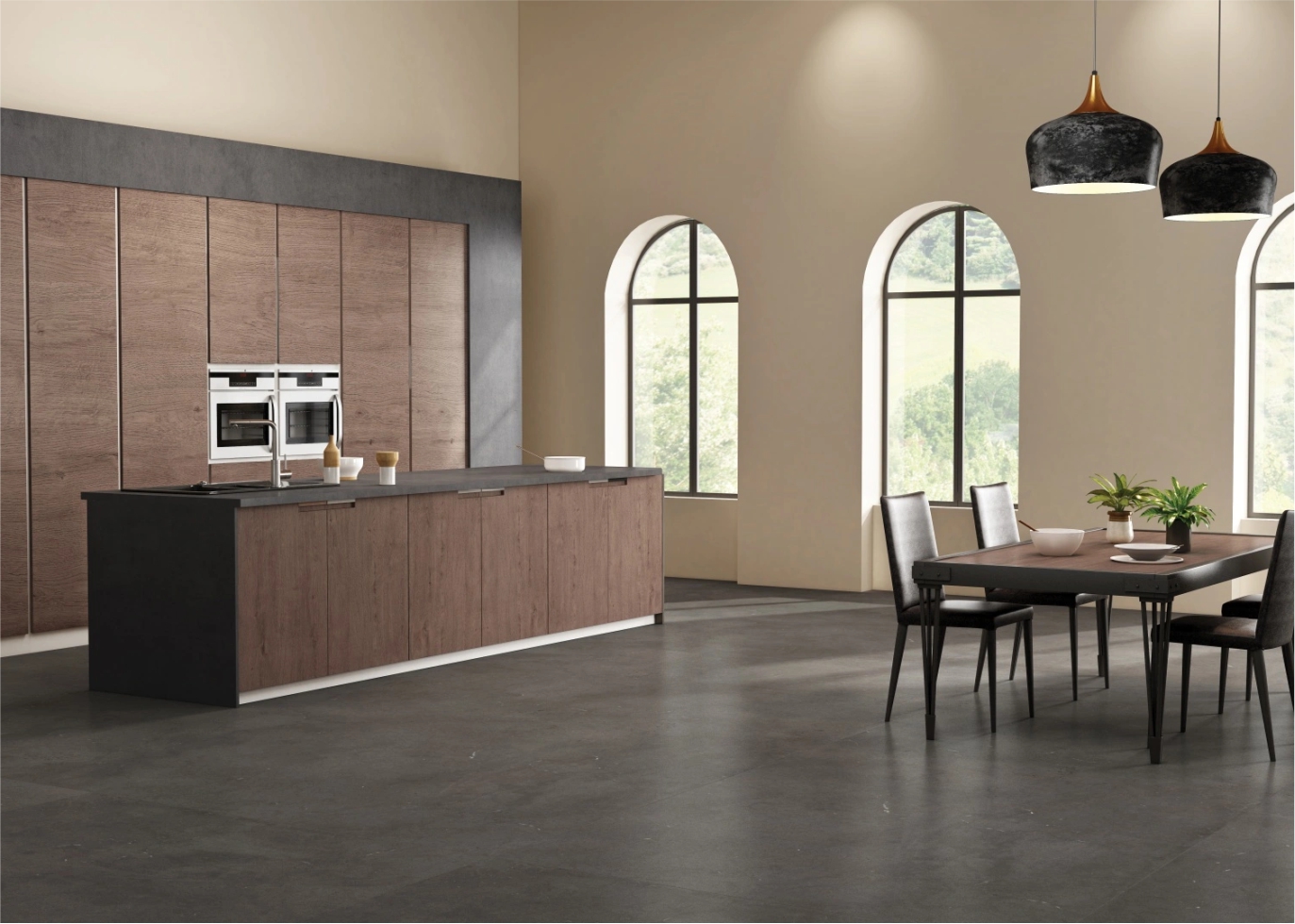
For open-plan living areas, consider how the tile connects with dining areas, entrances, or other adjoining spaces. A consistent surface direction can help establish continuity across connected zones.
Think About Layout
Do not select tile size based only on room dimensions. Doorways, columns, corners and furniture placement can affect cutting requirements and the final visual balance.
How to Choose the Right Porcelain Tile Colour and Pattern
Colour should be selected according to the complete interior rather than current trends alone. Look at existing walls, furniture, flooring transitions, cabinetry and decorative elements before making a decision.
Existing Interior Palette
Neutral surfaces can work well with a wide range of furniture and decorative styles, while stronger colours or patterns can become a more prominent design feature.
Subtle vs Expressive Patterns
Subtle textures and natural-inspired patterns can provide visual interest without dominating the room. More expressive designs can be considered when the surrounding furniture and décor are relatively restrained.
Natural and Artificial Light
Lighting can affect how a tile's colour and surface appearance are perceived. Review samples under the actual lighting conditions of the room before finalising the selection.
Consider the Complete Room
The selected living room tile design should work with furniture, curtains, lighting, wall colours and other surfaces. A coordinated palette generally produces a more cohesive result than selecting each element independently.
How to Select Porcelain Tiles for Living Room Floors
Floor tiles form a major visual foundation of the living room, so selection should balance appearance with application requirements. Consider the room's traffic, furniture arrangement, maintenance expectations, format, and overall design direction.
Large-format living room tiles can create a more continuous visual effect, while other formats may be more appropriate depending on the room's proportions and layout.
Before purchasing, check the manufacturer's technical information and confirm that the selected porcelain tile is appropriate for the intended flooring application.
How to Choose Porcelain Tiles for Living Room Walls
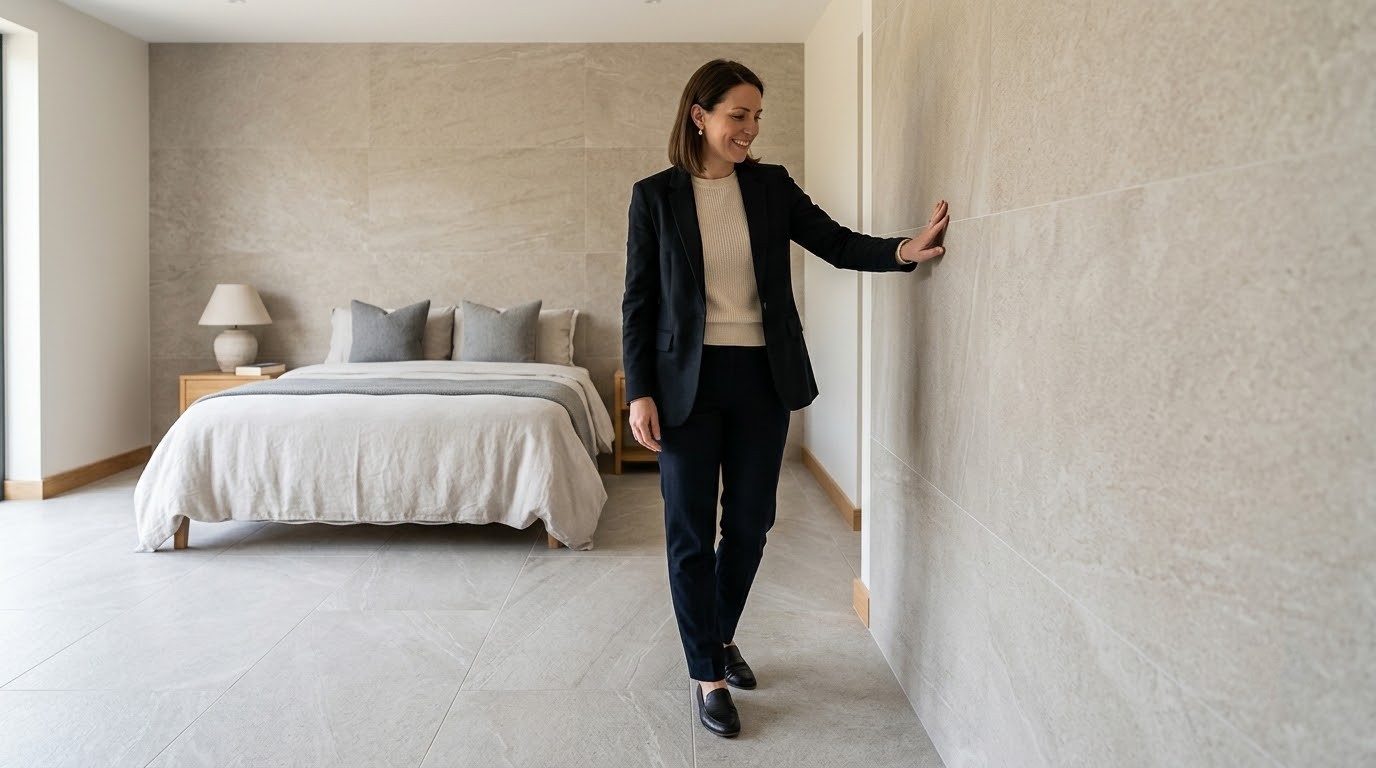
Walls provide an opportunity to introduce surface character without changing the entire room. Porcelain surfaces can be considered for feature walls, selected architectural areas, or broader wall applications, depending on the project requirements.
When selecting porcelain wall tiles for living room spaces, consider the wall's dimensions, furniture placement, lighting, and relationship with the floor. A coordinated wall and floor combination can create continuity, while a contrasting wall surface can establish a defined focal point.
How to Match Porcelain Tiles With Furniture and Lighting
Furniture and lighting should be considered before final tile selection because both can change how the surface is perceived.
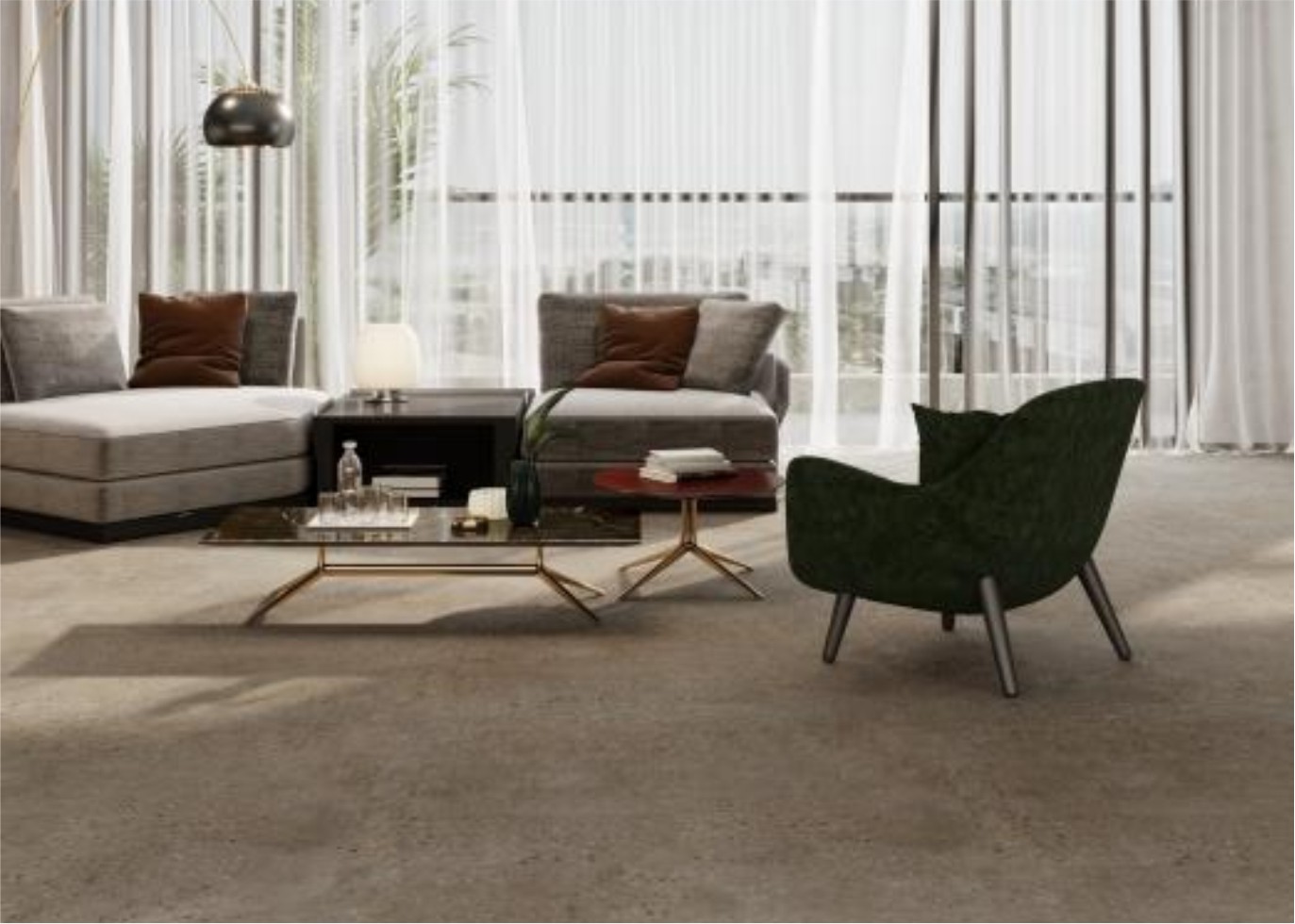
For rooms with visually prominent furniture, a restrained tile can provide a balanced background. Where the furniture is simple, a distinctive porcelain surface can introduce additional visual character.
Lighting should also be considered. Large windows, warm artificial lighting and directional fixtures can each affect the appearance of colour, texture and pattern. Reviewing physical samples in the actual room is therefore useful before confirming the final surface.
Common Mistakes When Choosing Living Room Porcelain Tiles
Several simple mistakes can affect the final result:
- Choosing a tile based only on its appearance in a showroom.
- Ignoring the actual room dimensions and installation layout.
- Selecting colours without considering natural and artificial lighting.
- Focusing on the floor while overlooking wall and furniture coordination.
- Choosing a format without checking installation and cutting requirements.
- Using too many competing patterns or surface effects in one room.
- Failing to confirm whether the selected tile is suitable for its intended application.
Taking samples home and reviewing them alongside furniture, wall colours and lighting can make the selection process more reliable.
Why Choose Lioli Ceramica for Living Room Tiles?
Lioli Ceramica offers porcelain surface solutions for residential interiors, giving homeowners, architects, and interior designers options to explore different living room applications according to design and project requirements.
When selecting a surface for a living room, factors such as room dimensions, intended application, format, finish, colour palette, furniture, and lighting can help determine the most suitable direction. Lioli Ceramica offers porcelain surfaces in different sizes, including 1600x3200mm, 1200x2400mm, 1200x2400mm (6mm), and 1200x3000mm (Facade). These formats can be considered according to the project's surface requirements and preferred interior design.
The selection process should focus on how the chosen surface works within the complete room rather than treating the tile as an isolated design element. This allows floor and wall surfaces to complement the architecture, furniture, and overall interior scheme.
Conclusion
Choosing the best porcelain tile for a living room is a process of balancing design, room proportions and application requirements. Format, finish, colour, pattern, lighting, furniture and wall-floor coordination should all be considered before making the final selection. A carefully chosen surface can support a cohesive interior while fitting the practical requirements of the space.
Lioli Ceramica provides porcelain surface solutions that can be considered for different living room wall and floor applications. By evaluating the room's architecture, dimensions, design direction, and surrounding elements, homeowners, architects, and interior designers can make a more informed porcelain tile selection for their projects.
Frequently Asked Questions
What type of porcelain tile is best for a living room?
The best porcelain tile depends on the room's size, application, lighting, furniture and design style. Consider format, finish, colour, and technical suitability together rather than selecting a tile based only on appearance.
Are large-format tiles suitable for living rooms?
Yes, large-format tiles can work well in many living rooms. Their suitability depends on room dimensions, layout, installation requirements, and the desired visual effect.
Should living room wall and floor tiles match?
They do not have to match exactly. Matching surfaces can create continuity, while complementary colours, patterns or finishes can introduce contrast and establish visual hierarchy.
How do I choose the right living room tile colour?
Consider existing furniture, wall colours, natural light, artificial lighting and adjoining spaces. Reviewing physical samples in the actual room can help you assess the colour more accurately.
Is porcelain suitable for living room floors?
Porcelain can be considered for living room flooring when the selected product is technically appropriate for the intended application. Always check the manufacturer's specifications before installation.