Pros and Cons of Porcelain Kitchen Floor Tiles
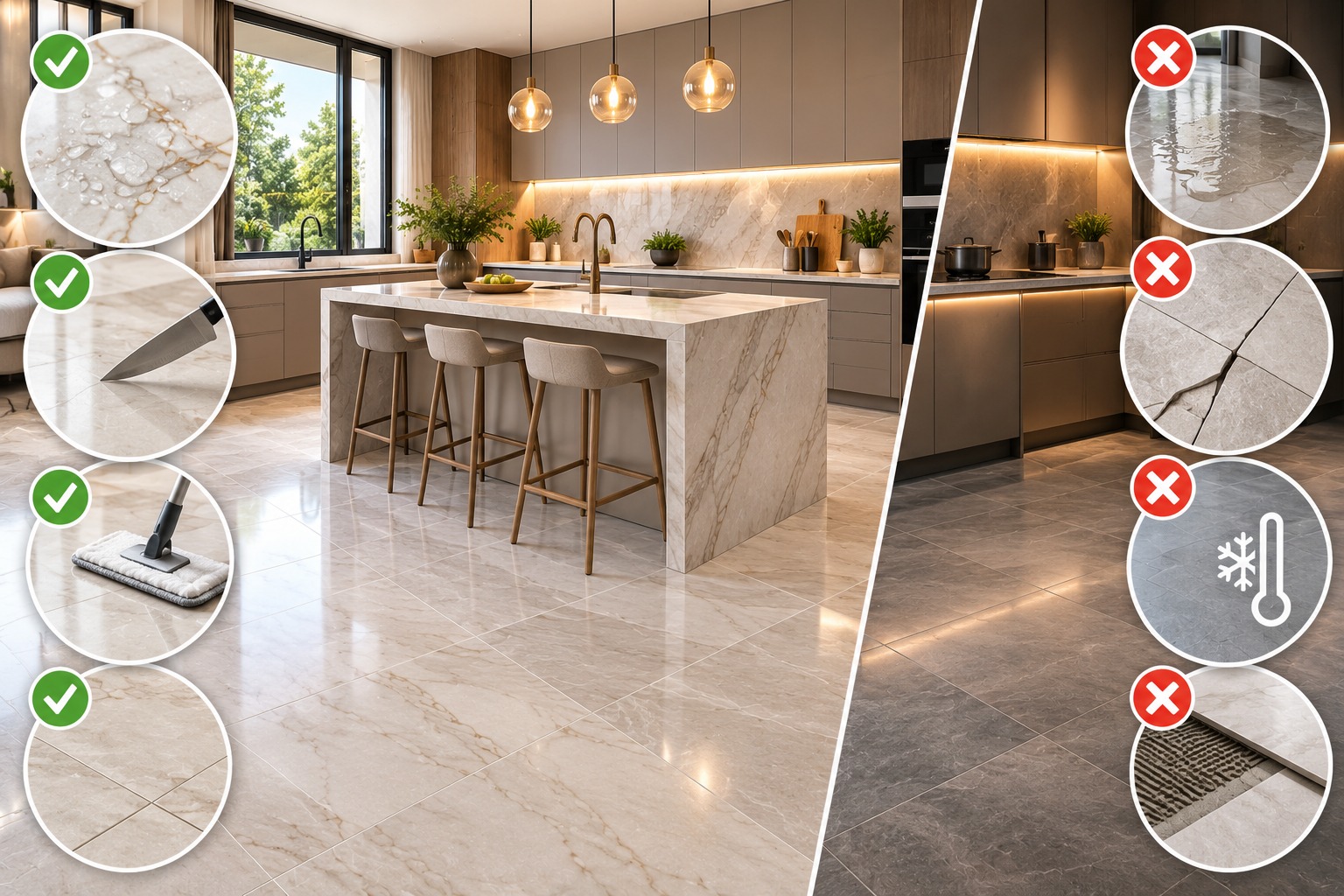
Table of Contents
Porcelain kitchen floor tiles are a practical flooring choice for homeowners who want durability, easy maintenance, and versatile design options. Their low water absorption makes them suitable for kitchens where spills and frequent cleaning are common. However, porcelain tiles can feel hard underfoot, certain finishes may become slippery when wet, and professional installation can increase the overall cost.
Understanding the advantages and disadvantages of porcelain kitchen floor tiles can help you choose flooring that complements your kitchen design while meeting your household's practical needs and budget.
Are Porcelain Tiles a Good Choice for Kitchen Floors?
Yes, porcelain tiles can be an excellent choice for kitchen floors because they combine durability, moisture resistance, and a wide range of design options. They are particularly suitable for busy kitchens that experience regular foot traffic, food spills, and frequent cleaning.
However, not every porcelain tile is suitable for every kitchen. The right choice depends on the product's intended application, surface finish, slip resistance, dimensions, and installation requirements. Evaluating these factors before purchasing helps you balance visual appeal with everyday functionality.
Advantages of Porcelain Kitchen Floor Tiles
The main advantages of porcelain kitchen floor tiles include durability, low water absorption, straightforward maintenance, and versatile designs. These qualities make them worth considering for both contemporary and traditional kitchens.
1. Durability for Everyday Kitchen Use
Porcelain tiles are generally dense and suitable for regular household use when the correct product is selected and installed properly. This makes them a practical option for kitchens where people cook frequently, move between rooms, and gather with family or guests.
Their resistance to ordinary surface wear can help maintain the floor's appearance over time. However, porcelain is not indestructible. A heavy object dropped onto a tile can cause chips or cracks, particularly if the underlying surface has not been prepared correctly.
For the best results, check the manufacturer's specifications to confirm that the selected tile is designed for floor installation.
2. Resistance to Water and Kitchen Spills
Porcelain tiles generally have low water absorption, making them suitable for areas where water and everyday spills are common. Their surface can usually be cleaned without absorbing ordinary spills in the way some porous flooring materials may.
This is useful in kitchens, where water, cooking ingredients, and food residue can reach the floor throughout the day. Regular cleaning helps prevent residue from accumulating and keeps the flooring looking presentable.
However, moisture management also depends on grout joints, installation quality, and maintenance. Wiping up spills promptly and keeping grout in good condition helps maintain a clean, well-maintained floor.
3. Easy Cleaning and Routine Maintenance
Porcelain kitchen floor tiles are generally easy to maintain. Regular sweeping or vacuuming removes loose dirt and crumbs, while damp mopping with a suitable cleaner helps remove everyday residue.
This makes porcelain a useful option for households that want attractive flooring without a complicated cleaning routine. Cleaning spills promptly can also prevent food residue and grease from building up on the surface.
Grout lines may require additional attention because grease and dirt can collect in the joints. Follow the manufacturer's cleaning recommendations and avoid harsh products that could damage the tile finish or grout.
4. Design Options for Different Kitchen Styles
Porcelain tiles are available in a variety of colours, patterns, dimensions, and finishes. Stone-inspired, concrete-inspired, and other decorative designs can complement different kitchen styles.
For a coordinated interior, consider how the flooring will look alongside cabinetry, wall finishes, lighting, and kitchen countertops. Neutral floor tiles can balance bold cabinets, while patterned designs can add visual interest to simpler spaces.
Tile size also affects the overall appearance. Larger tiles may create a more continuous visual effect, while smaller formats can suit particular layouts or design schemes. The final selection should account for both aesthetics and installation requirements.
5. Long-Term Value of Porcelain Flooring
Porcelain flooring can offer long-term value when the product is appropriate for the space and installed correctly. Its durability and routine maintenance requirements may reduce the need for frequent replacement.
However, value depends on the complete project cost, not just the price per tile. Include installation labour, surface preparation, grout, cutting, and material wastage when planning your budget.
Comparing the total installed cost of different flooring options gives you a more realistic understanding of which material best fits your requirements.
Disadvantages of Porcelain Kitchen Floor Tiles
Despite their practical benefits, porcelain kitchen floor tiles have several limitations. Hardness, temperature, slip resistance, installation complexity, and repair considerations should all be assessed before making a decision.
1. Hard Surfaces Can Be Uncomfortable to Stand On
Porcelain tiles create a firm, rigid surface that offers little cushioning. Standing for long periods while cooking or preparing meals may therefore feel uncomfortable compared with flooring materials that provide more flexibility.
A suitable kitchen mat in food preparation areas can improve comfort. Choose one that stays securely in place and does not create a tripping or slipping hazard.
2. The Floor Can Feel Cold Underfoot
Porcelain tiles can feel cold underfoot, particularly during cooler weather or in kitchens with limited direct sunlight. This may matter to households where people regularly walk barefoot.
Underfloor heating can improve comfort if the selected tile and installation system are compatible. Alternatively, suitable mats can provide warmth in frequently used areas.
Whether this disadvantage matters depends on the local climate, household preferences, and the kitchen's heating arrangements.
3. Slip Resistance Depends on the Tile Finish
Some porcelain tiles, particularly smooth or polished finishes, can become slippery when exposed to water, oil, or food residue. Slip resistance varies by product, so appearance alone should not determine your choice.
Check the manufacturer's technical information and select a tile suitable for kitchen flooring and the conditions in which it will be used. Do not assume that every matte finish is slip-resistant.
Regular cleaning is also important because grease and residue can affect traction. Choosing a suitable finish helps balance the desired appearance with the practical requirements of a kitchen floor.
4. Installation Requires Careful Planning
Porcelain tiles are dense and may require specialised cutting tools, careful handling, and experienced installation. Large-format tiles can be particularly demanding to transport, position, and cut.
The substrate must be suitably prepared and level for the selected tile system. Poor installation can contribute to uneven surfaces, cracked tiles, or other flooring problems.
Although professional installation adds to the initial expense, it can help ensure the work follows the manufacturer's requirements and that the finished floor is properly fitted.
5. Initial Costs and Repairs Need Consideration
The initial cost of porcelain flooring varies according to the design, dimensions, specifications, and installation complexity. Some options may cost more upfront than alternative flooring materials.
Individual damaged tiles can sometimes be replaced, but finding an exact match may be difficult if the original design or finish is no longer available. Keeping spare tiles from the original batch can make future repairs easier.
When planning your budget, consider the purchase price alongside installation expenses, maintenance requirements, and potential repair needs.
What Should You Check Before Choosing Porcelain Kitchen Floor Tiles?
Before purchasing porcelain tiles for your kitchen, assess these essential factors:
- Slip resistance: Check the product's technical information and suitability for areas where spills are likely.
- Surface finish: Balance appearance with cleaning requirements and underfoot safety.
- Tile dimensions: Consider the kitchen layout, cutting requirements, grout lines, and installation complexity.
- Product suitability: Confirm that the tile is specifically suitable for floor installation.
- Total cost: Include tiles, labour, surface preparation, grout, and installation wastage.
- Maintenance: Follow the manufacturer's recommended cleaning methods.
- Future repairs: Consider retaining spare tiles from the original batch.
These checks help you select flooring based on practical needs rather than appearance alone. Reviewing product specifications before purchase can also help you avoid choosing a design that is unsuitable for the intended application.
Kitchen Surface Solutions by Lioli Ceramica
Lioli Ceramica offers porcelain surface solutions for residential interiors, including options for kitchen design. When planning a kitchen, it is useful to consider flooring alongside the other surfaces so the cabinetry, walls, and worktops create a cohesive interior.
Homeowners can explore Lioli Ceramica's kitchen floor tiles, porcelain tiles, and porcelain kitchen countertops to understand the available design options. Before finalising a selection, review the specifications of each product and confirm its suitability for the intended application with the relevant product information or an installation professional.
Conclusion
Porcelain kitchen floor tiles offer a combination of durability, low water absorption, easy maintenance, and versatile design options. Their disadvantages include a hard surface, potentially slippery finishes, demanding installation, and possible repair challenges. The best choice depends on the tile's specifications, kitchen conditions, household needs, and overall budget. Carefully comparing the benefits and limitations helps you make an informed flooring decision.
Lioli Ceramica provides porcelain surface options for homeowners planning coordinated kitchen interiors. By exploring suitable designs and checking product specifications before installation, homeowners can make a more informed decision about incorporating porcelain surfaces into their kitchen while balancing style, practicality, and long-term value.
Frequently Asked Questions
Are porcelain tiles a good choice for busy kitchens?
Yes. Porcelain tiles can suit busy kitchens because of their durability, low water absorption, and straightforward maintenance. Choose a product designed for flooring and confirm that its finish suits the kitchen's expected conditions.
Do porcelain kitchen floor tiles crack easily?
Porcelain tiles are durable but can crack following heavy impacts or improper installation. Suitable substrate preparation, correct installation methods, and choosing the right product can help reduce the risk of damage.
Are porcelain kitchen floor tiles difficult to maintain?
Generally, no. Sweeping and damp mopping are usually sufficient for routine cleaning. Grout may need extra attention, and cleaning products should be suitable for the selected tile and grout.
Are porcelain kitchen floor tiles worth the cost?
They can be worthwhile for homeowners who value durability, low water absorption, and design flexibility. Compare the total installed cost, maintenance requirements, and product specifications with alternative flooring options before deciding.