Why Choose Porcelain Tiles for Bedroom Walls and Floors?
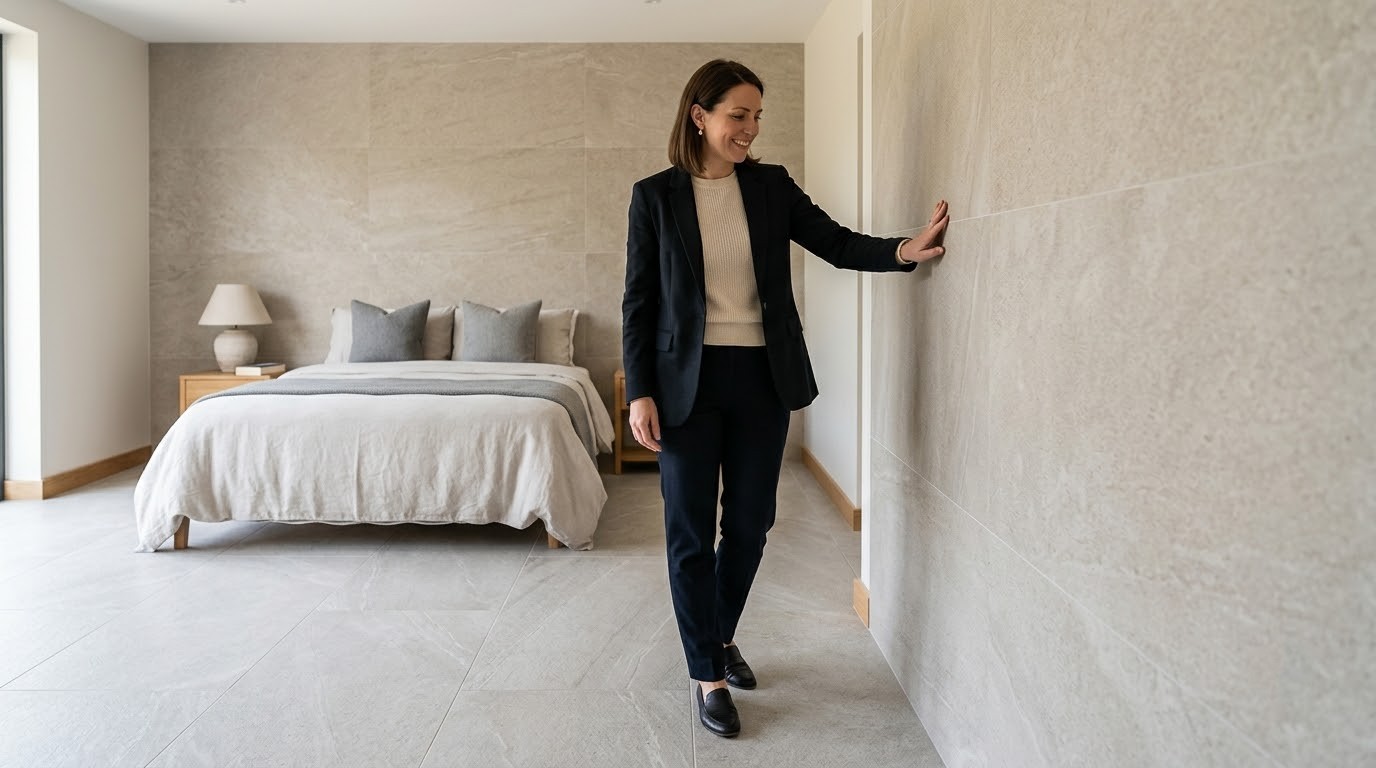
Table of Contents
- Why Consider Porcelain Tiles for Bedroom Walls and Floors?
- How Porcelain Tiles Can Enhance Bedroom Floors
- How Porcelain Tiles Can Transform Bedroom Walls
- How to Choose Porcelain Tiles for a Bedroom
- When Can Large-Format Porcelain Work in a Bedroom?
- Lioli Ceramica for Bedroom Wall and Floor Applications
- Conclusion
- Frequently Asked Questions
Key Takeaways
- Porcelain tiles can be considered for both bedroom floors and selected wall applications.
- Floor surfaces can establish the visual foundation of a bedroom.
- Feature walls can use porcelain to define the headboard or another focal area.
- Wall and floor surfaces do not need to match exactly to create a coordinated interior.
- Furniture, lighting, room proportions, and tile format should influence the selection.
- Large-format porcelain can support broad, contemporary surface designs where appropriate.
Choosing bedroom surfaces involves more than selecting an attractive floor. Walls, flooring, furniture, lighting, and architectural details all contribute to how the space looks and functions. Porcelain tiles can bring these elements together through coordinated surfaces, varied formats, and distinctive finishes.
They can be considered for bedroom floors as well as selected wall applications, giving homeowners and designers more flexibility when creating a contemporary, refined, or understated bedroom interior.
Why Consider Porcelain Tiles for Bedroom Walls and Floors?
Bedroom surfaces have a strong influence on the overall character of the space because they occupy large areas around the furniture and living zone. A well-planned combination of floor and wall surfaces can make the interior feel considered rather than assembled from unrelated materials.
Porcelain tiles offer flexibility in this regard. Different surface appearances can be used to establish a particular design direction, while complementary formats and finishes can help connect separate areas of the room.
The decision should not be based only on the appearance of an individual tile. The better approach is to consider how the selected surface will interact with the bedroom's dimensions, furniture, lighting, and architectural features.
This makes porcelain tiles for bedroom interiors relevant for projects where the objective is to create a coordinated surface scheme rather than simply replace an existing floor or wall finish.
How Porcelain Tiles Can Enhance Bedroom Floors
The bedroom floor establishes the visual base of the interior. It is seen across the room throughout the day and interacts directly with the bed, wardrobes, side tables, rugs, and other furniture.
Establishing the Visual Foundation
A well-selected floor can provide a consistent base for the rest of the bedroom. Subtle porcelain surfaces can allow furniture and decorative elements to stand out, while more distinctive designs can become part of the room's visual identity.
Supporting Different Interior Directions
Bedroom floor tiles can work with a range of design approaches. Soft neutral surfaces can suit restrained interiors, while stone-inspired or marble-inspired designs can create a more distinctive architectural appearance.
Working With Room Proportions
Tile format can influence how a floor is perceived within a room. The choice should take the dimensions, layout, and furniture arrangement into account instead of being based only on the appearance of an individual tile.
Creating a Consistent Surface
A carefully planned floor can help avoid visual fragmentation. When the surface, furniture, and surrounding walls are considered together, the flooring can become a quiet foundation for the complete bedroom design.
How Porcelain Tiles Can Transform Bedroom Walls
Walls provide a different design opportunity from flooring. Instead of covering every wall, porcelain can be used strategically to define particular areas of the bedroom.
Creating a Headboard Feature
The wall behind the bed is naturally one of the strongest focal points in a bedroom. A porcelain surface can define this area and create a more architectural alternative to a conventional painted wall.
Adding Material Character
Patterns, textures, and natural-inspired surfaces can give a bedroom wall greater depth. This can be particularly useful where the rest of the room follows a restrained design approach.
Defining Specific Zones
Porcelain wall surfaces can help distinguish a sleeping area, dressing zone, or another architectural feature without requiring additional decorative structures.
Connecting Wall and Floor Design
A wall surface does not need to exactly match the floor. Similar tones, complementary patterns or related finishes can create a connection while still giving each surface its own visual role.
How to Choose Porcelain Tiles for a Bedroom
Choosing bedroom porcelain tiles should begin with the room itself rather than the tile catalogue.
Start With the Room Layout
Look at the position of the bed, wardrobes, windows, doors, and major architectural elements. This helps determine which surfaces will receive the most visual attention.
Decide Where the Feature Should Be
If the floor already has a strong design, the wall can remain relatively restrained. If the floor is simple, the headboard wall can become the main feature.
Match the Surface to the Furniture
Consider wardrobes, bed frames, side tables and other large elements before finalising the tile. The aim is to create relationships between materials rather than competing combinations.
Consider Format and Scale
The format should suit the size and proportions of the room. Large-format bedroom tiles can create a broad visual effect, while other formats may be better suited to specific layouts or feature applications.
Review the Complete Material Palette
Evaluate the tile alongside wall colours, furniture finishes, fabrics, lighting and décor. This gives a more realistic understanding of how the finished bedroom will look.
When Can Large-Format Porcelain Work in a Bedroom?
Large-format porcelain can be considered when the design calls for broad, visually continuous surfaces. On floors, it can support a clean contemporary appearance. On selected walls, it can create a substantial feature without dividing the surface into numerous visual sections.
The right format depends on the room dimensions, product suitability, installation requirements, and overall design. Large format should therefore be treated as a design and application decision, not simply as a larger version of a conventional tile.
Lioli Ceramica for Bedroom Wall and Floor Applications
Lioli Ceramica offers porcelain surface solutions for residential interiors, allowing different surface selections to be considered according to the character and requirements of a bedroom. Its porcelain-focused offering can support a range of interior approaches, from restrained spaces to bedrooms built around a stronger feature surface.
For a bedroom project, selection can be guided by the room's layout, furniture, lighting, preferred design direction, format and surface appearance. Wall and floor choices can then be developed as related elements rather than as separate decisions.
This approach allows homeowners, architects and interior designers to consider porcelain surfaces as part of the overall architecture and interior composition. Lioli Ceramica provides a platform for exploring these possibilities while allowing the final combination to be adapted to the requirements of each bedroom.
Conclusion
Choosing porcelain tiles for bedroom walls and floors is primarily a matter of creating the right relationship between surfaces, architecture, and interior elements. The floor can establish the room's visual foundation, while a carefully selected wall surface can introduce definition and material character. Considering both together makes it easier to create a balanced bedroom rather than a collection of unrelated finishes.
Lioli Ceramica offers porcelain surface solutions that can be considered for different residential bedroom concepts. By evaluating the room layout, furniture, lighting, format, and surface design together, homeowners and design professionals can develop bedroom interiors that feel cohesive, considered, and suited to their individual requirements.
Frequently Asked Questions
Are porcelain tiles suitable for bedroom floors?
Yes. Porcelain tiles can be considered for bedroom flooring, with different formats, finishes and designs available to complement a variety of residential interiors.
Can porcelain tiles be used on bedroom walls?
Yes. They can be used for selected applications such as headboard walls, feature walls and accent areas to add material character and visual definition.
Can bedroom wall and floor tiles match?
They can be coordinated through similar colours, patterns or finishes. Matching is not essential, and complementary surfaces can often create a more balanced result.
Are large-format porcelain tiles suitable for bedrooms?
Yes, when the format suits the room dimensions, design and installation requirements. Large formats can create broad visual surfaces on suitable floors and walls.
How should bedroom porcelain tiles be selected?
Consider the room layout, furniture, lighting, desired focal point, format, surface appearance, and relationship between walls and floors before making a final selection.